New farm, cattle, and large-acreage pond construction from the ground up — and professional dredging to bring existing ponds back to full depth. One crew, one fleet, permits handled.
A well-built pond is one of the best long-term investments you can make in rural land. It waters livestock, holds irrigation water, supports a healthy fish population, adds real value to the property, and gives you a place to enjoy for decades. A poorly built one leaks, erodes, fills in, and turns green. The difference is almost entirely in how it's designed and dug.
Panhandle Pond and Lake Services builds farm ponds, cattle ponds, fishing ponds, and large recreational ponds across Bay County and the Florida Panhandle. We don't do backyard koi ponds or water gardens — we build real, working water bodies on real acreage, using the same heavy equipment fleet we use for dredging: excavators, a long reach excavator, dozers, and dump trucks.
We handle the whole project — site evaluation, permitting, clearing, excavation, shaping, sealing, drainage structures, and finishing — so you deal with one contractor from the first walk-through to the day the pond fills.
Every pond starts with a question: what's it for? The answer drives the size, depth, shape, and features we design into it.
Reliable water through dry spells, sized for your herd, with firm, gently sloped access points so cattle can drink without tearing up the banks and muddying the water.
Water storage built for capacity, with the depth to limit evaporation losses and the drainage structures to manage heavy Panhandle rains without washing out.
Deep water for summer refuge, shallow shelves for spawning, and the right shape for healthy bass and bream — then stocked so your pond starts producing.
Multi-acre ponds and small lakes for swimming, kayaking, and the view from the porch — with docks, beach areas, and clean, stable shorelines.
From the first walk-through to a full pond, here's what a build looks like with Panhandle Pond and Lake Services.
We walk the property, look at the soils, slope, drainage, and water table, and design a pond that fits your land and what you want from it. Free, on-site, no obligation.
We figure out exactly which approvals your pond needs — from the Northwest Florida Water Management District, Florida DEP, the county, or the Army Corps — and handle the paperwork.
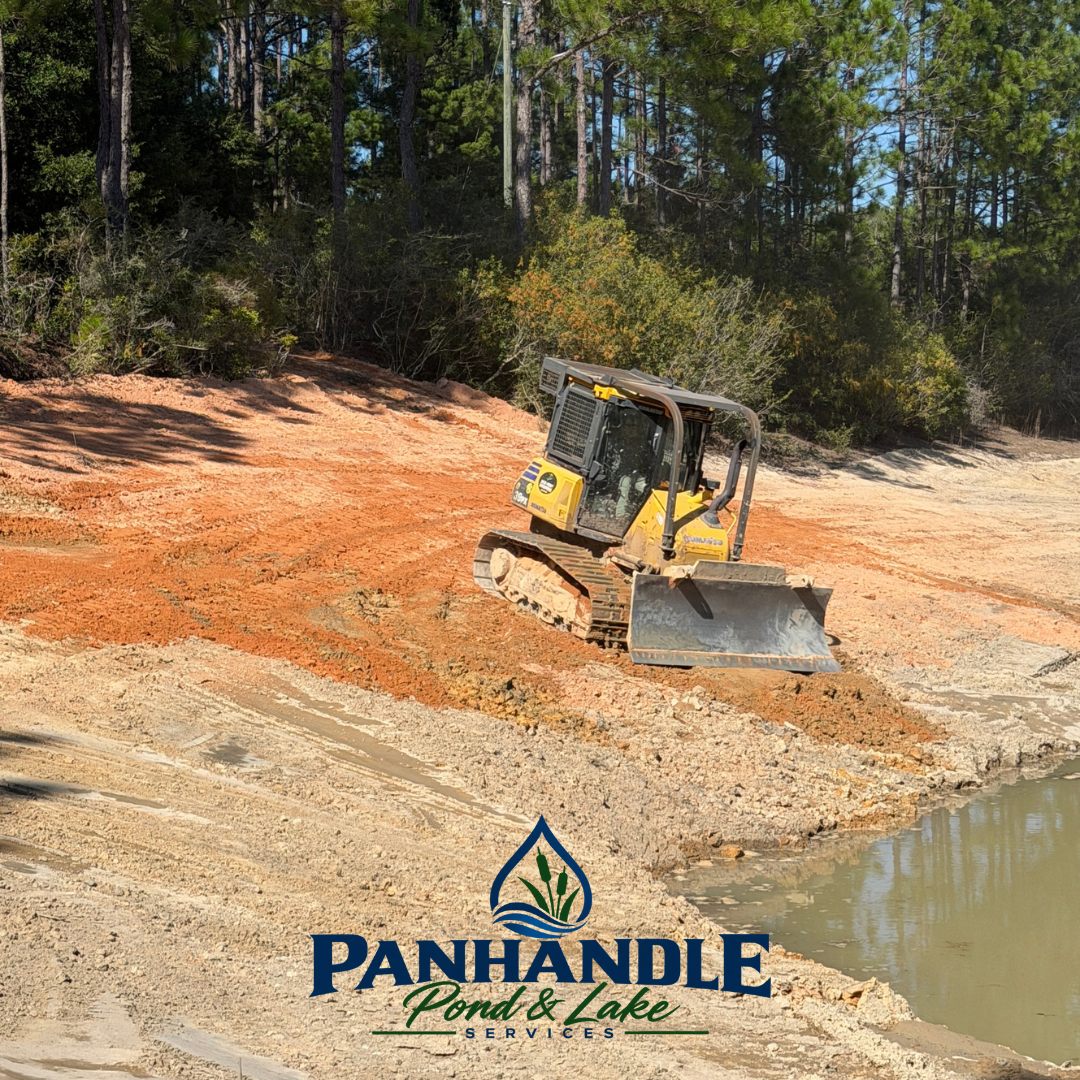
Our dozers, excavators, and dump trucks clear the site, dig to design depth, shape the slopes and shelves, and move or spread the spoil. Clay lining or liners go in where needed.
We install spillways and drain pipes, build docks or beach areas, seed and stabilize the banks, and stock fish once the pond is ready.
We own and run the equipment that builds your pond. No subcontracted dirt work, no waiting on someone else's schedule. The same crew that designs your pond digs it.
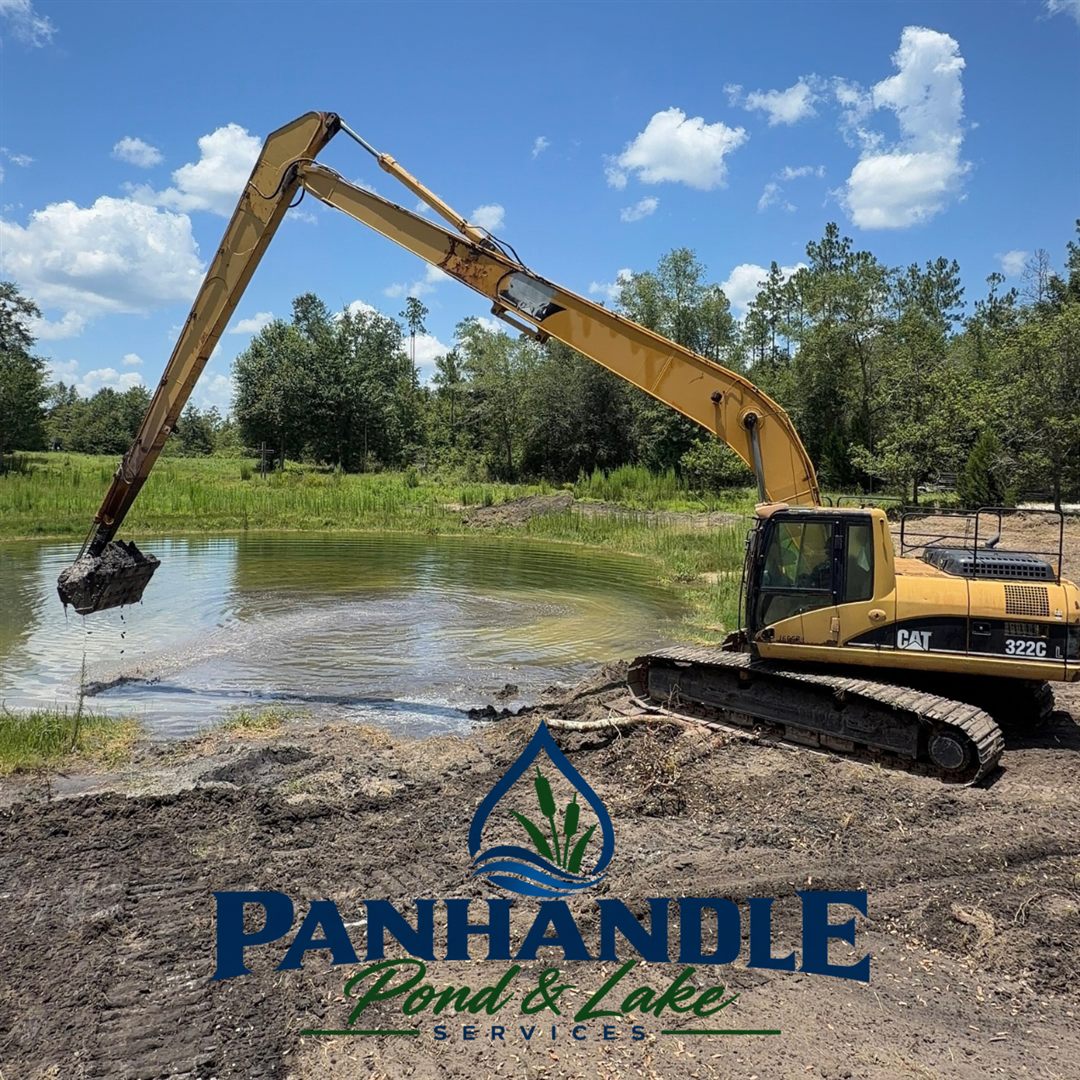
Our long reach excavator lets us dig deep and shape slopes from the bank on big ponds, our dozers clear and grade the site and spread spoil, and our dump trucks haul material where it needs to go — on your property or off it.
Every pond naturally fills with sediment over time. Decomposing organic matter, eroded soil, and settling particles accumulate on the bottom — reducing depth, degrading water quality, and creating the exact conditions that fuel algae blooms, foul odors, invasive weed growth, and fish kills. What was once eight feet deep can become three feet deep over a decade or two. When that happens, professional pond dredging is the most effective fix.
We dredge with the same excavation fleet we build ponds with, led by our Long Reach Excavator for reaching deep sediment from the bank. Because we build ponds, we dredge them back to a proper design — restoring depth, slopes, and capacity, not just scooping out muck. All dredged material is properly managed and disposed of in line with Florida DEP and local regulations.
Most of these problems share the same root cause: accumulated sediment that needs to come out.
Sediment builds up at roughly an inch a year in many Florida ponds. Dredging restores original depth and water-holding capacity.
Muck releases nutrients that feed algae and produces rotten-egg odors as it decomposes. Removing it eliminates the source.
Shallow, muck-filled ponds run low on oxygen and lose deep-water refuge. Dredging restores the habitat fish need.
Filled-in retention ponds can't hold runoff, creating flooding risk and compliance problems. Dredging restores design capacity.
We build and dredge ponds across all eight counties of the Florida Panhandle. Based in Panama City, we're equipped for projects from a single cattle pond to multi-acre lakes.
How to plan a working pond for livestock and irrigation — sizing, location, soils, cattle access, and what the build process looks like.
Read Article →Which agencies may be involved, when agricultural exemptions can apply, and why it pays to sort out permitting before the first shovel of dirt.
Read Article →Depth for fish, cattle, and water quality in the Florida heat — and why the shape of the bottom matters as much as the deepest point.
Read Article →The factors that actually drive the price of a new pond — size, soils, hauling, lining, structures, and permits — and how to get an accurate quote.
Read Article →The warning signs that your pond has accumulated too much sediment and needs professional dredging before problems get worse.
Read Article →What affects the rate of sediment buildup in Florida ponds, and how to know when it's time to dredge.
Read Article →Keep your new pond healthy from day one with aeration and fountains that boost oxygen, reduce algae, and slow muck buildup.
Learn More →For ponds that need targeted muck extraction rather than full dredging — organic muck removal, storm debris cleanup, and waterway restoration.
Learn More →Keep a new or newly dredged pond clear from the start with mechanical harvesting and licensed herbicide treatment for invasive aquatic plants.
Learn More →